


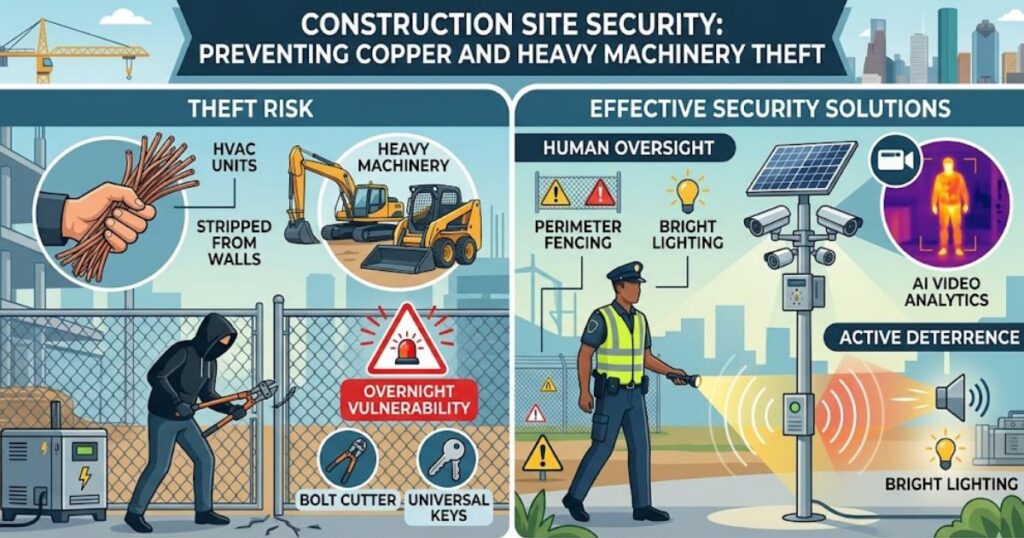
Construction Site Security: Preventing Copper and Heavy Machinery Theft
The northern corridors of Greater Houston—specifically the rapidly expanding communities of Spring and Conroe—are experiencing an unprecedented development boom. Driven by corporate relocations, master-planned residential communities, and major infrastructure extensions along the Grand Parkway and I-45, construction cranes and earthmovers have become permanent fixtures of the landscape.
However, this massive influx of capital and material has not gone unnoticed. For organized crime rings and opportunistic thieves alike, an un-monitored job site is a literal goldmine. When the sun sets and the crews pack up for the day, these expansive properties transform from productive development zones into highly vulnerable targets.
For project managers and developers operating in Montgomery and Harris Counties, understanding the mechanics of “overnight” vulnerability is the first step toward safeguarding profits, maintaining project timelines, and implementing robust construction site security in Houston.
The “Overnight” Vulnerability: Why Construction Sites are Targeted
Construction sites are inherently difficult to secure. Unlike a traditional warehouse or corporate office, a job site is dynamic, sprawling, and constantly changing shape. Perimeter fencing is often temporary, multiple sub-contractors move in and out daily, and valuable assets are frequently left exposed to the elements.
The risk multiplies exponentially during the overnight hours, typically between 6:00 PM and 5:00 AM, as well as over holiday weekends. During these windows, sites are completely dark, devoid of foot traffic, and often rely solely on passive security measures like a standard chain-link fence and a padlock.
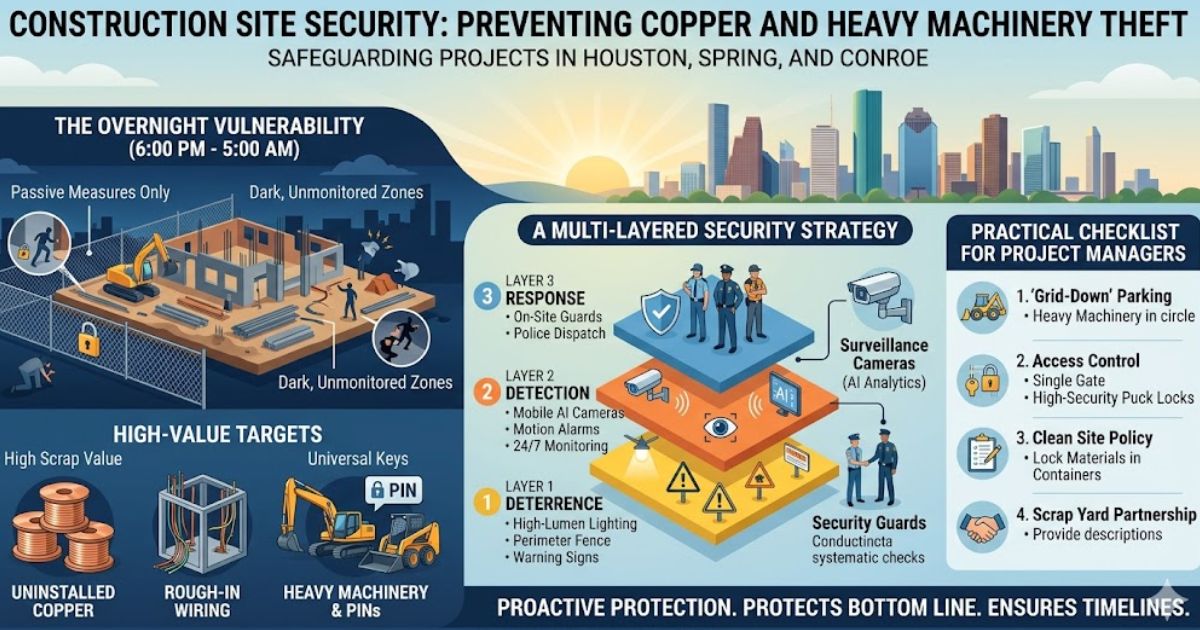

Thieves exploit this lack of presence. Operating under the cover of darkness, a small crew can breach a perimeter, hotwire a skid steer, strip thousands of dollars worth of copper wiring out of a partially framed commercial building, and vanish before the morning shift arrives.
The High-Value Targets: Copper and Heavy Machinery
While a thief will steal everything from hand tools to appliances, two primary assets drive the bulk of construction site losses in the Spring and Conroe areas: copper and heavy machinery.
1. The Copper Epidemic
Copper remains one of the most frequently stolen materials on job sites due to its high scrap value and ease of resale. Thieves target:
-
Rough-In Wiring: Electrical wire already installed inside walls, which thieves violently rip out, causing catastrophic structural and drywall damage that costs far more to repair than the copper itself is worth.
-
Uninstalled Spools: Bulk spools of copper wire left in unsecured trailers or open truck beds.
-
HVAC Condenser Units: Thieves will rapidly strip copper coils out of newly installed commercial or residential AC units, rendering the expensive equipment useless.
The financial hit of preventing copper theft on job sites goes far beyond the material replacement cost. The resulting project delays, labor re-mobilization, and insurance premium hikes can severely jeopardize a project’s profit margins.
2. Heavy Machinery Theft
The theft of heavy equipment—such as skid steers, excavators, backhoes, and utility vehicles—is a highly organized enterprise. Many modern pieces of machinery utilize universal keys, making them alarmingly easy for experienced thieves to start and load onto a flatbed trailer within minutes.
Once stolen, these assets are quickly moved across state lines, sold on the black market with altered product identification numbers (PINs), or shipped internationally. A missing excavator doesn’t just mean a $60,000 loss; it means a grading crew sits idle for weeks waiting for a replacement, throwing the entire project schedule off track.
The Solution: A Multi-Layered Security Strategy
Relying on a single line of defense is no longer sufficient in high-growth zones like Conroe and Spring. To truly mitigate overnight risk, developers must employ a proactive, multi-layered approach that integrates physical barriers, advanced technology, and human oversight.
| Security Layer | Component | Objective |
| Layer 1: Deterrence | Perimeter Fencing, High-Lumen Lighting, Warning Signage | Make the site look difficult, risky, and unattractive to target. |
| Layer 2: Detection | Mobile Surveillance Units, Motion Alarms, AI Video Analytics | Catch intrusions in real-time before damage or theft occurs. |
| Layer 3: Response | 24/7 Security Guards, Local Law Enforcement Dispatch | Physically intercept criminals and secure the perimeter. |
Technology vs. Presence: Job Site Security Cameras and Guards
When designing a security protocol, project managers frequently debate whether to invest in technology or human presence. The reality is that the most effective defenses combine job site security cameras and guards into a singular, cohesive ecosystem.
The Power of Mobile Surveillance Units
Modern security cameras have evolved far beyond passive recording devices. Today’s job site surveillance units are mobile, solar-powered towers equipped with:
-
AI Video Analytics: Thermal and optical cameras that can differentiate between a stray dog and a human intruder, eliminating false alarms.
-
Active Deterrence: High-decibel sirens and strobes that activate automatically when a perimeter is breached during off-hours.
-
Remote Monitoring: Live feeds routed directly to a 24/7 monitoring center, where virtual guards can voice-down over loudspeakers to warn trespassers that law enforcement has been dispatched.
The Human Element: On-Site Security Guards
While technology provides comprehensive coverage across vast acreages, it cannot physically lock a gate that a subcontractor left open, nor can it conduct physical searches of dark corners. Dedicated security guards provide an invaluable physical presence.
A guard on patrol acts as an immediate visual deterrent, conducts scheduled perimeter checks, verifies the credentials of anyone attempting late-night access, and can provide immediate, accurate situational reports to the police if a breach occurs.
Practical Checklist for Project Managers in Spring & Conroe
To minimize your overnight vulnerability, integrate these daily best practices into your site management routine:
-
Implement a “Grid-Down” Parking Strategy: At the end of the day, park heavy machinery in a tight circle with smaller, highly targeted equipment (like generators or compressors) locked in the center. Lower all buckets and blades to the ground to make towing nearly impossible.
-
Enforce Strict Access Control: Limit entry points to a single gate. Use robust, high-security puck locks rather than standard padlocks, which are easily cut with bolt cutters.
-
Establish a “Clean Site” Policy: Do not leave copper spools, plumbing fixtures, or expensive tools sitting in open sight. Lock materials inside fortified storage containers or transport them off-site.
-
Partner with Local Scrap Yards: Engage with local recycling and scrap yards in Conroe and North Houston, providing them with descriptions of any unique materials or marked items to make selling stolen copper highly difficult for thieves.
Conclusion: Safeguarding Houston’s Growth
The rapid expansion of Spring and Conroe represents an incredible economic opportunity, but it also demands a higher standard of operational vigilance. Allowing your job site to remain exposed overnight invites financial loss, administrative headaches, and devastating project delays.
By investing in comprehensive construction site security in Houston—leveraging the combined strength of AI-driven surveillance cameras, physical fortifications, and professional guard services—you protect your bottom line and ensure your project crosses the finish line on time and on budget. Do not wait for an overnight raid to secure your assets; make security a priority from the day you break ground.